Wednesday, April 12, 2017

Italy - March - April 2017

In mid March Nancy and I went to Italy to hike part of the Francigena Way.  The Francigena Way is an old pilgrimage route from Canterbury in England to Rome in Italy.  That’s a long way but we just did the last 100 miles from Orvieto to Rome.  Before starting the hike we spent a couple of days in Venice.  This worked out well as it was a relatively inexpensive RyanAir flight from East Midlands airport in the UK (just 45 mins from my mother’s home) to Venice.  Of course RyanAir drop you in Treviso which is not quite Venice but that’s OK both the price and the timing were good.

Venice
We stayed at the Hotel Metropolitan which sits by the water just a few blocks from St Mark’s Square.  It doesn’t look great from the outside but on the inside it is a wonderfully luxurious place.  One of those off-season deals from Hotels.com that was a real steal.

I hadn’t been to Venice since I was 20 so it was nice to be back.  Not too much has changed in 45 years, it has all become much better preserved.  What a wonderful old city kept alive by tourism.

That night at dinner we talk with a Belgian couple at the next table.   The conversation turns to Brexit and President Trump.  We agree Brexit is bad but that the EU has considerable problems.  Their impression of Trump - he’s a clown.

Venice - view from the Academy Bridge
Our first morning in Venice we walked over to the Academy Bridge and over to the Guggenheim Museum.  I think that it is a wonderful museum - not too large, manageable in an hour or so, and it contains some wonderful pieces of art.  Mostly 20th Century stuff but a little bit from just about anyone who was anyone in that time period. Simply wonderful.


In the afternoon I headed over to the St Mark’s and the Doge’s Palace by myself as Nancy had been there the year before.  A truly remarkable square with truly remarkable buildings, works of art in themselves.  Surprisingly they cathedral and the palace were not too crowded.  I guess early April is a good time to visit - nice weather and modest crowds.  There was an exhibit of Hieronymus Bosch paintings at the Doge’s Palace.  Only about 6 paintings and not too remarkable ones either.  Apparently he became renowned down south in Venice before he became famous in his home in the Netherlands.

St Mark's Venice
That night at dinner, the waiter refuses to give me Parmesan cheese for my seafood pasta - “no sir, that would not be good”.  Nice to have a waiter who knows what’s best for his clients.


We spent two nights at the Metropole and then on the Thursday morning we set off for the train station and the train to Orvieto.  It was a high speed train from Venice to Florence where we switched to a slower local train to Orvieto.  The high speed train was wonderful - very modern, very clean, very, very fast (of the order of 200 km/hr at times).  A real treat for an Amtrak traveler.  What was also surprising was the amount of track that was in a tunnel - from Bologna to Florence is 78 km of which 74 km is in tunnels.


The train arrived in Orvieto around 3:00 in the afternoon and we took the funicular up the hill to the old town.  The ticket also included the bus ride from the funicular to the main square by the duomo.  And what a duomo - the most magnificent cathedral you can imagine just sitting there in the square - the front facade all gilded mosaics, sculptures and carvings, the sides and back alternating layers of black and white stone.

The Duomo in Orvieto
We checked into our very lovely hotel (the Magnolia B and B) and then wandered around the town.  Another town, at least the old part of town that sits on top of the hill, that is dominated by tourism.  Still there weren’t so many tourists this early in the season and it had a nice feel.  We sampled some local wine and for dinner (at LaPalomba, recommended by Rick Steves) we tried the local speciality of wild boar pasta.


The next day was the start of our hike.  We breakfasted in the coffee shop next to the hotel and set off on the route.  The trail guide lead us down the hill out of town and eventually out of the urban area up a road into a oak woods and lanes through small farms.  We got in the way of some sheep being moved down the lane and caused the shepherds a bit of trouble getting them back into the right field.  They had beautiful white sheep dogs that we later saw a lot of over the next few days - the Maremma Abruzzese Sheepdog apparently.

Pine Trees on the Francigena Way


Nice walking and for the most part the trail was well marked or well described in the guide book.  In the mid-afternoon, Lake Bolsena appeared in the distance, our destination for the night.  As we entered the town of Bolsena I realize that I didn’t bring the hotel voucher for the evening’s stay, and I don’t have the name of the hotel.  That could have been a problem, but wifi in the town square and a Skype call to our tour company in London provides our hotel destination for the night, the quite adequate though nothing exceptional Hotel Lorina.  I didn’t make that mistake again.

Markers along the Way 


The next morning we left the town and the lake behind us and gradually climbed up on a nice track in the woods into open rolling farmlands.  We picnicked for lunch outside some sort of hostel that was closed (we were early in the season) before descending through oak woodlands again.  We were caught by two Germans and their baby in a backpack and we foolishly followed them off the main trail for a while until we realized our mistake.  Generally there are a lot of Francigena Way markers but sometimes things got a bit sketchy and other trail markers take over.  Thankfully we realized our mistake and doubled back before getting too far off route.


In the mid afternoon we saw our destination, Montefiascone, sitting on the top of a hill in the distance.  Unfortunately it wasn’t the hill we were on at the time and it did seem a long way away.  We eventually reached Montefiascone and walk through the outskirts to the old part of town (on top of the hill as is usual in Italian towns).  The church we had been seeing for the last couple of hours, church of Santa Margherita is on top of the hill and just behind it is the Rocca dei Papi gardens.  We wander around the church and gardens and climb to the top of something called the Pilgrim Tower for a nice view of the surrounding countryside.  The skies look a little grey and foreboding.


The nights hotel, the Urbano V Hotel, was quite nice but it’s restaurant was closed and they arrange for some transfer of our meal voucher to the Stuzzio Restaurant nearby.  The Stuzzio is a great restaurant and we have a wonderful meal (soup, pasta, meat course, dessert) all washed down by a bottle of the local wine, Est, Est, Est.  Est is short for “bonum est”, so this wine is triply good.  Legend has it that a monk who liked wine sent his servant ahead to sample the local wines and report back.  The wine is Montefiascone was so good he gave it a three star review.  The monk arrived some time later and drank the wine and promptly died, hopefully well satisfied.  The wine was very good.


The Cassia Way
The next morning we left Montefiascone and headed gently downhill along an old Roman Road (the Cassia Way).  What an impressive road - still intact after a couple of thousand years or more of use.  The large boulders of the road were a little hard to walk on however.   Not the most comfortable road.  Leaving the Cassia Way behind us we walk up farm tracks through more nice countryside.  We took our lunch on the crest of a hill at a table by an old farm building.  After lunch and just before the town of Viterbo we pass a thermal hot spring full of Italians out for the weekend.  I dozed at the side of the trail while Nancy went in to soak in the hot springs.  They didn't look that appealing to me - too many Italian men in Speedos.

We arrived in Viterbo our home for the night a little earlier than expected and we had time to visit a couple of churches and the Papal Museum.  The churches as always were wonderful, the Papal Museum, not so great.  Our hotel was a small B and B in the old quarter of town.  Very nice and we were the only residents.  Dinner was in town where we ordered way too much food - Octopus, Boar Ragu, Pizza.  A situation not helped by the happy hour snacks in a bar next to the hotel.


The next day, Monday, we were en route from Viterbo to Vetrella.  After leaving Viterbo through the old gate in the city wall we walked on a road between high tufa walls.  Very nice walking in this very narrow high walled gorge.  As the road opened out we do a spell of walking alongside a freeway, fortunately not for too long.  As we head uphill through olive orchards away from the freeway we pass a couple who are searching the undergrowth for wild asparagus - very fine and thin asparagus.  I search the undergrowth for the rest of the day and I couldn’t find one.  We walk on through old olive orchards and we get an abbreviated day as our hotel for the night (Antica Locanda della Via Francigena) is 1.5 km before the town of Vetrella.

The Road out of Viterbo


As we were finished and at the hotel by 2:00 pm we walked into town to get some food - a late lunch.  We found an unassuming place called La Lanterna del Santo and just got in before they closed for the afternoon.  We had some wonderful food even if the waitress was not particularly helpful - lasagne, pasta, salad, wine.  Quite unexpected and very cheap and quite tasty.  


We sauntered around the town, had a couple of Aparols (fast becoming our signature drink), and then back to the hotel for more food - dinner in the hotel’s large and very tacky dining room.  Too much food again today.


Tuesday’s hike from Vetrella to Sutri was the longest yet some 27 km.  That was significantly longer than the other days which had been around 18 km.  We left Vetrella and walked through nice woodlands until we came out into an area of hazelnut orchards.   We had lunch in the orchard and walked on until we reached two large towers.  They were the ruins of an old Roman mausoleum - the Torri di Orlando.


More walking on a well maintained gravel road lined with lots of majestic Stone Pine trees.  We reached the town of Capranica, at first the very ordinary modern part of town, and then the very beautiful old town.  After Capranica the trail headed towards a valley with a flowing stream which was quite beautiful but had lots of downed trees that make navigating the trail a bit tricky.  The downed trees got even worse and we reached a section that had been logged that required climbing over and under the obstacles.  Apart from the downed trees this section was some of the most beautiful trail so far.  Lots of colorful flowers.  

The trail before Sutri


Our destination Sutri is again a lovely town with Roman ruins on the outskirts.  Our day’s hike ends at a Roman Coliseum excavated out of the soft tufa rock.  We then had a bit of trouble finding our hotel.  It was some distance out of town, on a road that was just too busy to walk along.  We headed into town check in at the tourist information office.  Apparently there were no taxis in town so that option was out.  The TI call the hotel and find out we should eat in town at a certain restaurant and then the proprietor of the restaurant would transfer us to the hotel.  We then checked email to find that we should have been picked up at the amphitheatre at the end of the hike and taken to the hotel.  I called the tour company and they arranged to pick us up in town, take us to the hotel, Il Borgo di Sutri, and then the hotel brought us back to town for the evening meal.  It was a lot of ferrying about but it worked.  It was just a shame we didn’t realise we had to do all this shuttling around earlier.  It would have been a lot less stressful.


On Wednesday morning we left the very fine Il Borgo di Sutri and took a shortcut out of the back of the hotel to the Francigena Way.  Nice walking to the town of Montorosi where we stopped for an espresso.   Walking on through nice country until we reached a waterfall, the falls of Monte Gelato, where we took a break.  The trail guide told us that we have only 2.9 km to go but that 2.9 turns into at least 7 or 8 km.  That was a bit frustrating - at the end of the day when you think you are nearly done but in fact you have quite a ways to go.


As usual the end of the day was a slog up the hill to the old town of Campagnano di Roma.  This was perhaps the least attractive old town that we visited.  Not so much charm in Campagnano.  Our hotel, the Hotel Benigni, was just outside the old city gates.  The hotel also was not very impressive.


Since we didn’t like the look of the hotel we decided to have a small snack in town at one of the nicer looking restaurants.  I have Grecia Pasta with Pigs Cheeks - quite nice but not the best.  Since we also had a meal paid for at the hotel we decided to see what it was like - surprisingly it wa very good - beef steak with arugula.  The manager of the hotel was a nice guy from Albania - he spoke perfect English.


Next morning we headed out of Campagnano and, again, we walked through some nice countryside  considering that we were so close to Rome - farm tracks, parklands, gravel roads.  Just before lunchtime we arrive in the town of Formello.  We took the opportunity to buy some foccacia for lunch which we ate by the gates to the old part of the city.  We discover that the bitter green leaf we had previously been calling bad quality spinach (as in our meal in Orvieto) is actually chicory.  I hadn’t tasted it in the green form before (only as an addition to coffee in post war England - Camp Coffee), it was very bitter and not a favorite.  


The descent out of Formello was very pleasant.  We passed an area with some early Etruscan ruins.  Another bitter salad green is encountered as we passed by a field with an old lady collecting leaves.  She gave me a sample - perhaps they were dandelion leaves, I am not sure.  They were also very bitter.


Another error in the guide book at the end of the day as the final kilometer turns into 2 or 3 km.  We finally make it to the Hotel Cassia in La Storta.  La Storta is not a pretty town, we were quite close to Rome now and La Storta sits on what must be one of the main roads leading towards Rome - lots of traffic.  We did find an excellent Aparol Spritz before dining at a pretty average and nondescript restaurant (by Italian standards).
Afternoon Drinks - Aparol


Friday, the final day of the hike, we left La Storta for our destination at the Vatican, some 12 miles away.  A little more urban walking as we are so close but we still managed to find some nice parklands and green belts.  Strangely the Via Francigena signs which were quite prolific since Bolsena became quite scarce.  We got a bit off route in La Giustiniana but with the help of Google Maps on the iPhone we recovered.  


The guide book again proved to be problematic and we decided to ignore it and follow what few VF signs we see.  We were getting frustrated by our guide book - when you pay for a tour like this the one thing of value they provide should be an accurate guide, while we didn’t encounter anything we couldn’t figure out, it was sometimes far from clear where we were supposed to go.


We walked up through a park that provided us with nice views of the north side of Rome.  The Olympic Stadium and the Tiber were below us and while the Vatican was not visible it should be just around the corner.  We dropped into the suburbs again and had lunch before climbing through another park, this one with great views of the Vatican below.  Walking into the city, the trail passed through what looked like a homeless camp which Nancy wanted to avoid, so it was Google Maps to the rescue to navigate a small diversion.  
Our destination, the Vatican
As we got close to the Vatican we realised something was different.  St Peter’s Square was closed because all the EU leaders were getting together to celebrate the Treaty of Rome’s 50th anniversary.  So the last 100 meters of our hike into the square was not going to happen.  We wandered around the outside of the square and as we were doing so several motorcades of EU leaders come speeding into the square.  The only I recognize is Angela Merkel, so for the second time in my life I get to see Angela.


We walked the last kilometer or so to our hotel which was on the south west side of the Vatican and our hike was done - 100 miles in 8 days.  A nice moderate daily mileage.  I wouldn’t have wanted to do much more each day and 8 back to back days was enough.


Since there were all the EU leaders in town parts of the city, including the Vatican, were closed the next day so we decided to get out of town for the day.  It was a couple of hours by fast train to Bologna and apparently it is a nice city for a day trip so off we go.  The train was quite comfortable and incredibly fast and we were in Bologna in time for lunch.  Bologna was thronged with people, not tourists, locals.  The streets and squares were quite busy.  The town itself is wonderful too - lots of great churches, lots of arcades of shops, a great central square and the towers, there are several towers that are quite distinctive.
The Towers of Bologna
We had lunch sitting outside a small restaurant and, of course, I had the Pasta Bolognese - it was wonderful.  
Pasta Bolognese in Bologna
In the afternoon, I walked around the sights while Nancy toured the shops.  The main square, Piazza Maggiore, was thronged with young people.  Just hanging out on a nice Saturday afternoon - musicians providing the entertainment.  We walked back to the station and caught the 6:00 pm train back to Rome.  Back in Rome we discovered you can have a bad meal in Italy - the restaurant was conveniently on the way back to our hotel, but the food was far from good.


On Sunday morning we went to St Peter’s to check out what had been closed the previous day.  On the way we got our Testimonium - the document that certifies that we have completed some part of the Francigena Way.  At each night’s stop on the walk we could get a stamp in a “passport” to validate we have made the ‘pilgrimage’.  In Rome this was checked and they gave us a certificate on parchment paper.   All very official.


In the square people were waiting for the Pope to bless them so we joined the throng.  While we were looking at the center stage in front of St Peter’s the Pope popped out at a window high up and to the right.  You could barely see him but there were large screen TVs in the square that showed him in close up.  The crowd seemed enraptured by him; there was a group from some South American country that were quite lively in their support.  To me the atheist, this was all very strange.
In St Peter's Square, the Pope is at the top window, 2nd from Right
After our papal blessing we went into St Peter’s.  Certainly one of the most amazing man-made structures in the world.  It is mind bogglingly beautiful and so incredible to think it was built so long ago.  As Nancy wanted to do Communion, I decided to accompany her, and we got to go through a roped off area to the main altar.  While Nancy had communion, I sat respectfully in awe of this most wondrous place.


The Pieta in St Peter's
After St Peter’s we walked over to the Trastavere area for lunch.  We found a really nice restaurant, La Lucia, and had a wonderful lunch (with a bottle of Est, Est, Est wine).  Our faith was restored in Italian food.


Back to the hotel via the Trevi Fountain which was incredibly crowded.  While it is a wonderful fountain, the crowds take away from the splendour of it all.  I can’t imagine what it's like in the peak season.


In the evening more walking around - the Spanish Steps, the high end shopping below the Spanish Steps, the Trevi Fountain again, still crowded.  Then we had a nice meal in a restaurant close to our hotel.


On the following morning, Monday, I was scheduled to pick up my Uzbekistan Visa from the Uzbek Embassy.  We walk over to the Embassy which is close to the Vatican.  Google Maps actually takes us to the Somali Embassy, not quite what we want but a check on the address shows the Uzbek Embassy two or three blocks away.  At the Embassy, which is very non-descript office on the third floor of an old building, I find all is well with my Letter of Invitation and Visa Application but that I need a bank draft for $70.  So it's off to a bank to make the payment which is an experience in itself.  To get into an Italian bank you have to put your bags into a locker outside the bank, press a bell to get them to open a door into a cubicle big enough for one person, look into a camera in the cubicle, If you are acceptable the door on the other side of the cubicle opens to let you into the bank.  That is quite the security procedure.  Same thing in reverse to get out.  The bank draft is quite a bureaucratic process involving lots of pieces of paper and signatures and passport photos but I eventually get it and go back to the embassy where I get my visa.  What a process.


Before lunch we made a quick visit to the Cappuchine Monk’s Ossuary which is a group of chapels adorned with human skeletal bones and mummified monk’s bodies.  All very weird and wonderful.


A quick lunch then we took Nancy to the station to catch her train to Puglia and her bicycle trip.  I was then alone in Rome.  Since my new camera had failed back in Venice I decided to purchase a new one and somehow try and return the old one for credit when I get back home.  After calling just about every camera store in Rome I found a camera at a store not too far away.  When I arrived in the store there was a person in front of me who was looking at the same camera, a Canon GX7 Mark II, and he bought the only one in stock.  Apparently it had been on the shelf for a couple of months and on this fateful day two people showed up to buy it,  I was the unlucky one.


In the evenings I had a flurry of notifications from the Uzbek Embassy, they want me to return.  Apparently they want more money.  They charged me the European price and not the US price.  US citizens pay $90 more.  So the next morning I was off to the Embassy again, and of course then to the bank as they don’t accept cash.  Still it was good to have the paperwork sorted before I arrived in Tashkent with an imperfect visa.


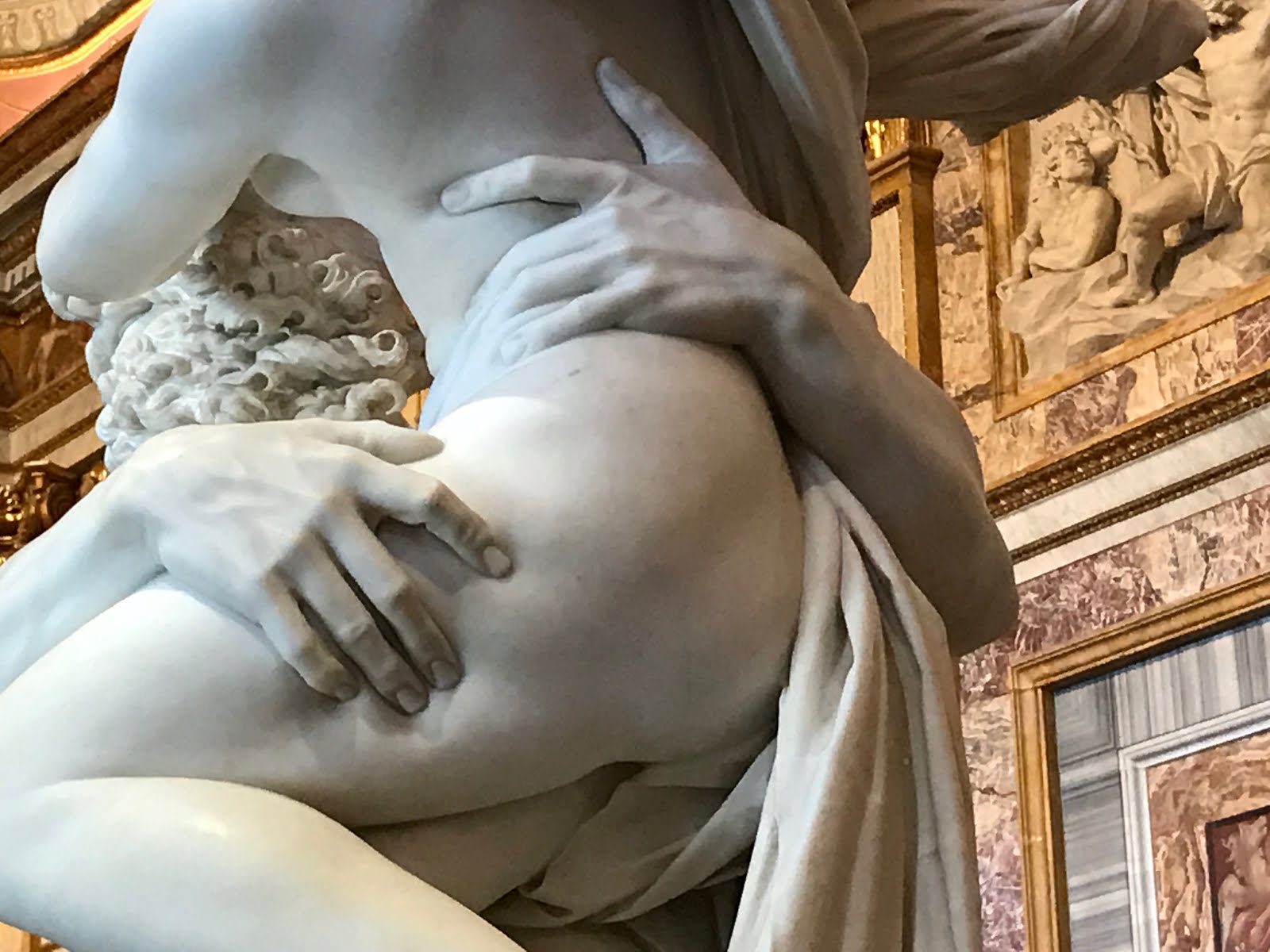
After the Embassy I paid a visit to the Borghese Museum.  This was a real treat, the Borghese park itself is wonderful and the museum in the Borghese Palace is a treasure.  A few Caravaggio’s and a few Bernini sculptures and assorted miscellaneous items in a wonderfully over the top ornate palace.  I was particularly impressed at how Bernini could make a marble statue look so lifelike - the flesh looks so soft.

Bernini's Sculpture

Marble made to look like flesh


On the way back to the hotel I was accosted by a man in a car who said he knows me, he had been to the US and after I said I live in Sacramento, he had been to Sacramento, his brother has a restaurant there called Tony’s.  I can’t imagine what scam he was trying to pull but he wanted me to get in his car.  I bade  him farewell.


In the late afternoon I took the train to the airport and my flight to Tashkent for the next part of my trip.

Many more photos are here.


Saturday, December 31, 2016

Mexico City, Zihuatenejo - December 2016

Rather than spend Christmas in Sacramento we (Nancy, Erica, Joe and Arden) decided to spend Christmas in Mexico.  We spent 4 days in Mexico City and then 4 days on the coast in Zihuatanejo.  As usual we all traveled different routes, myself arriving late on Saturday night from London via Houston.  A bit of a long trip but I survived.  

For the first couple of nights we were in a hotel in the La Condesa area of Mexico City.  A nice neighborhood to the south west of the old part of town (Centro Historico). 

After a much needed sleep, the others were going out to Teotihuacan to visit the pyramids there.  As I had visited the site a few years earlier and as it is quite a drive out of the city, I decided not to go and stayed back in the city.  I wanted to visit the Anthropology and Art Museums on the edge of Chapultepec Park which was quite nearby our hotel.

The La Condesa neighborhood is quite nice and it is pleasant and safe to walk around.  The first stop for me was the Museum of Modern Art.  It is in a nice corner of the larger Chapultepec Park with some nice sculptures in the surrounding area.  The gallery itself was not that impressive - not so much a permanent collection but three or four exhibits by people I hadn’t heard of and to be honest wasn’t overly impressed by.  I am sure at times it has good exhibits.


Interior Courtyard of National Museum of Anthropology
I moved on up the road to the National Museum of Anthropology.  This is quite a large museum in an impressive building with a wonderful interior courtyard with gardens and a fountain.  The building was more memorable for me than the exhibits.  The exhibits are wonderful but there are so many of them from every era of human development in Mexico that after a while I was overwhelmed and couldn’t tell my pre-Columbian from my Toltec from my Aztec or Mayan.  It was just overwhelming to take it all in in one visit.


Los Voladores de Papantia
After leaving the museum I wandered around and found these costumed guys spinning around a large 150ft pole suspended by ropes around their the feet.  They were upside down and slowly rotating and descending while all the time one guy was beating a small drum and playing a flute (and rotating upside down).  I found out later that they are the Voladores de Papantla - their performances are on the internet.  It looked a bit contrived for the tourists and visiting Mexicans, but everyone, including me, enjoyed it.


Ladder with Pink Balloon
Moving on I visited the Museum of Contemporary Art (or the Museo Tamayo as it is also known as).  This was smaller and a much nicer space than the previous art museum with a great collection.  Lots of stuff that I really liked and just the right size to cover without getting an aching back, which usually afflicts me in larger art galleries.  I was mistaken by the ladder leaning against the wall, thinking it was some maintenance going on, when actually it is “Ladder with Pink Balloon” by a Mr Ortega.  I didn’t notice the small pink balloon at the top of the ladder.  I could truly have created that piece.


Angel of Independence
I walked back into town along the impressive Paseo de la Reforma past the Fountain of Diana the Hunter and the statue of the Angel of Independence.  It is likely one of the more important streets in the city and it’s as impressive as any major street in any modern capital.  Back to the hotel I walked alongside the old relic of the Aztec Aqueduct that runs along Avenida Chapultepec.

The next day was Monday - a day when most museums, galleries and the like are closed in Mexico City.  So faced with that we thought we would walk through the large park - Chapultepec Park - that was adjacent to our neighbourhood.  That was easier said than done and we walked quite a ways only to find that the park also was closed on Monday (unless you were a cycle commuter and then you had access for your commute).  The next mission was a market so we Ubered over to the Coyoacan Market and wandered around there for a while.  Uber turned out to be a great service for traveling around Mexico City - no fussing with money, no wondering if you are being taken by a circuitous route, no worry about unmetered taxis, no security worries as the driver is clearly identifiable and visible to you and the entire world - and what is more, it is incredibly cheap.
Coyoacan Market
A nice church in Coyoacan, the Parroquia de San Juan Batista (parish church of San Juan Batista I think) with wonderful paintings and a gilded altar.  The Catholic Church certainly does a nice job of creating a peaceful cool retreat from the bustle of the city outside.
Parroquia de San Juan Batista
We had checked out of our hotel earlier in the day and in the afternoon we Ubered over to another hotel in the Centro Historico.  This was the Gran Hotel de la Ciudad on the Zocalo square.  A hotel we had stayed in before on a previous trip to Mexico.  This is a beautiful old building, once a very fine department store now converted to a hotel.  In the old part of the town which was built on an old lake bed there is a lot of subsidence and buildings lean and tilt.  One of our rooms was noticeably on an angle and it was an uphill hike to the bathroom.  The hotel also has a wonderful stained glass roof that is worth visiting the hotel just to see it.
Stained Glass Ceiling of the Gran Hotel de Ciudad
The Zocalo Square was all decked out in its Christmas finery with lights on all the surrounding building, a huge fake Christmas tree, an ice skating rink and some sort of ice slide that you slid down in a big rubber inner tube (that looked like a lot of fun).
Zocalo and Cathedral at Christmas
In the late afternoon we walked down Avenida Madero, the pedestrian precinct off the Zocalo, which even on a Monday was thronged with people.  We had cocktails and beers in the Casa de los Azulejos (House of the Blue Tiles) which is now occupied by a Sanborns restaurant and store.  There is a very nice mural by Orozco in the stairwell by the entrance to the toilets - what a wonderful building.
The Orozco Mural in the Casa de los Azulejos
On the way back to the hotel we stumbled across a bakery - the Pasteleria Ideal.  What a wonderful place.  There are piles of cakes and buns everywhere and the way it works is you pick up a large tray and a pair of tongs and then help yourself to whatever you need.  Then you go to a counter where a lady itemizes your selection and gives you a ticket.  You take the ticket to a cashier and pay and then return to find your purchases wrapped or boxed ready for you to carry home.  The whole wrapping procedure is done with such skill and efficiency that it is worth a visit to see that operation even if you don’t really like the Mexican pastries - which some of our party were not too impressed with (admittedly they sometimes look better than they taste).  To add to the delights of the bakery there was an exhibit of elaborate iced cakes on the second floor.
Cake Exhibit at Pasteleria Ideal
The next day we visited the Cathedral on the Zocalo - a very impressive building indeed.  I always enjoy visiting the old colonial churches and sitting in the cool and quiet while marveling at the ornateness and the scale of the wealth of artifacts everywhere you look.  The full name of the church is the Metropolitan Cathedral of the Assumption of the Most Blessed Virgin Mary into Heaven and it is the largest cathedral in the Americas.


Roof of the Metropolitan Cathedral
While the ladies went to Mass in the Cathedral, the heathen men walked around the city.  We returned after the Mass and we all took the Bell Tower tour of the Cathedral.  We had done this before and it provides a wonderful view of the old city.  You are taken up a spiral stone staircase up to the rooftop level and get to hear a little history of the bells installed in the various towers.  Then you get to wander around on the domed roof for a while.  It is remarkable that you can walk on the top of this roof that must be quite old (parts of the cathedral were built in the 16th Century), even more remarkable when the building is on a subsiding lake bed in a known earthquake zone.
Diego Rivera Mural in the Palacio de Bellas Artes
Moving on we were going to visit the Palacio National, also on the Zocalo square, where there are some fine Diego Rivera murals.  Alas this was not to be the case as the Palace was closed for some official function -  police and men in suits were everywhere.  So on we walked by a circuitous route to the Palacio de Bellas Artes.  This is another fine building - Art Nouveau on the outside and Art Deco on the inside.  It is noted for its fine murals by Diego Rivera, Orozco, Siqueiros and others.  Diego repainted here a mural similar to the one he did for the Rockefeller’s in New York and which they took offense to and destroyed - lots of communist icons - Marx, Lenin, Trotsky, etc.
The Zocalo at night
In the evening we dined at a restaurant behind the Cathedral, La Casa de las Sirenas with some friends from Sacramento (the Wassermans) who were also visiting the city.  The Zocalo Square was quite splending when lit up at night.

The next morning we left the city for the coast.  Another Uber to the airport and a short one hour flight to Zihuatanejo (a smallish resort south of Ixtapa).  The cold that had been haunting me since I arrived in Mexico was now taking hold and I welcomed the chance for a more restful beach location, though the heat and humidity were not so welcome.
View of the bay at Zihuatanejo
Alas there was no Uber in Zihuatanejo so we took a very expensive taxi from the airport to the place we were renting. The place we were staying was an Airbnb that was on the hill behind the town.  It was a beautiful condominium with three levels, three bedrooms, a small infinity pool on the top level and a great view of the bay below. 

We spent 4 days here, including Christmas Day, returning to the USA on Boxing Day.  We spent a fair amount of time on the beach and in the ocean with the occasional trip into town and a trip to a nearby beach that turned out to be not quite as good as the beach in town.  While I was suffering from a cold I spent most mornings in the cool of the condominium reading by the pool while everyone else went off to wander around town.  A nice few days rest even if I wasn’t feeling well.
Many more photos are here.

Sunday, July 31, 2016

Safari in Tanzania - July 2016

Following our epic climb up Kilimanjaro we (Nancy, Erica, Arden and myself), went on a 4 day Safari in Tanzania.  We were in Moshi after our climb and with barely time to rest the next morning we left for the Kilimanjaro Airport to catch our flight to Lake Manyara.  It was a toss up whether the flight made any sense for us as the flight was a couple of hours late and the distance to Manyara was only about a 3 hours drive.  Still we took the small prop plane (Coastal Aviation) for the 30 minute flight out to Manyara.  


The airport at Manyara was perched on top of the escarpment of the African Rift Valley.  At the airport we were met by our guide for the trip, Elias.  The entire trip was organized through the group Tusker but they sub-contracted the safari portion out to a company call Hoopoe Safaris. Again we were alone on the safari, just the four of us. We had a Toyota Land Cruiser with 4 seats in the back and a pop-up top to facilitate the wildlife viewing.  From the airport we set off down to Lake Manyara National Park - a small park in the valley below the Rift escarpment surrounding Lake Manyara.  
Our Guide - Elias
Our African Safari wildlife viewing started with the most uninspired of sightings - a local freshwater crab - barely visible beneath a rock in a small stream bed.  It was not what we were expecting in the way of African wildlife but, of course, that was only the start.  It got better as we progressed, very much better  Animals were everywhere - lots of baboons, warthogs, elephants, giraffes, and antelope - progress was slow as we seemed to stop at every turn to observe something new.  We watched an elephant destroy a tree - a wonderful animal but what damage they can cause to the vegetation.  

We had a packed lunch in a small picnic area alongside what appeared to be a Mormon family doing missionary work locally - that's just what Tanzania needs. One of that party was a young girl with blue hair - I made a wise-crack about spotting a blue haired human - which at least I found funny. Carrying on the tradition from the mountain, there was way too much food in the packed lunch.
Olive Baboon
We went out to Lake Manyara and saw lots of interesting birds - Yellow-billed Storks in great numbers, the weird looking Hamerkop, the beautiful little bee-eater.  To the ladies annoyance the guide discovered I had a love of birds and so he would stop for every single bird in sight. I loved it but I think the ladies would perhaps have liked to pass by some of those more mundane sightings.


Bee-eater
We had a long day traveling around the park and we were all quite tired by the time we left for our hotel/camp. It was a great first day and, despite the freshwater crab, a great introduction to the wildlife of East Africa.


As we left the park we drove up the side of the escarpment and then headed off the highway for a few miles of dirt road to reach our hotel for the night - the Kirurumu Lodge.  Although the lodge was a long way off the main road it was quite luxurious - perched on the edge of the Rift Valley escarpment with great views and wonderful individual cabins.  We availed ourselves of a beer as the sun set and then had dinner in the restaurant.  It was a pretty good meal by Tanzanian standards though we were “treated” during the meal to the local Masai tribesmen doing a song and dance routine - basically a lot of chanting with each Masai taking turns to spring up vertically in the air.   They like to jump, the Masai.  I struggle with those kind of local ethnic displays just for visiting tourists - they are so artificial.


Next morning we had the chance to walk around the bush area adjacent to the hotel.  We followed our Masai guide as we walked on a loop for a couple of miles.  The area is sparsely populated but we did walk through a family’s small homestead - pretty basic mud huts and dirt floors, a huge way away from the luxury that we had stayed in the previous night which physically was just around the corner.
How the other 95% live
After our hike we continued on to the Ngorongoro Crater (via the town of Karatu).  At the entrance gate to Ngorongoro there were 20 or 30 similar Land Cruisers all doing their permitting and paperwork for entry to the park.  It took quite a while for Elias to sort things out so we had plenty of time to kill observing the other human species waiting alongside us.  I actually met someone I recognised from Sacramento - Michael Carrol (someone I had run with some 10 or 15 years ago).  It is a small world.
Cape Buffalos
On gaining entry to the park we drove around the east side of the crater before descending down into the crater at the Lemala Ranger Post.  Once down on the floor of the crater we were treated to all sorts of wonderful sights - Grant’s Gazelles, Hartebeests, Wildebeests, Cape Buffalo, Thompson’s Gazelles, Elands, Bushbucks, Waterbucks, Ostriches, and way in the distance a Black Rhino.   Everywhere you looked there was something interesting to see.

Wildebeest
We saw our first lions - a small group of them lying around on the ground paying no attention to anything or anyone around them - apparently totally oblivious to our presence though I didn’t want to test that.  The males are quite lazy and the females are the more active ones who look after the kids and get the food. At this point we got a flat tire and Elias skillfully set about changing it. I wandered around outside under the pretense of watching for lions while Elias was busy changing the tire. The lions weren't interested in us, there being much easier (and likely tastier) prey wandering all around.
Lioness and Cubs
We stopped for lunch near a small lake where we saw hippos or at least hippopotamus noses and eyes as the popped up from time to time to take in air.   After lunch we spotted more lions, this time a lioness with a couple of cubs - very cute.

Grey Crowned Cranes
The birds of course were spectacular too - Grey-crowned Cranes, Kory Bustards, a Sacred Ibis, the most wonderful Superb Starling, Shrikes, Rollers, Weaver Birds, etc.  The list was long.
The appropriately named Superb Starling
We drove around for the rest of the afternoon seeing more wonderful things - Giraffes, Elephants, Jackals, Hyenas….
An old solitary Elephant
At the end of the day we headed up the west side of the crater wall to our camp for the night, the Kirurumu Pakulala Tented Camp.  This was a more primitive camp than the previous night and everything was housed in large green tents - it looked like a military camp.  However, the facilities were great - each tent had a bed and then at the back a shower, toilet and washbasin.  If you wanted a shower they would heat up water and then someone would pour it into a tank behind the tent so that you had running warm water.  The person would then wait dutifully by the back of the tent in case you needed more water. We were the only 4 in the entire camp, leaving us to wonder how they make money.


The food also was pretty good - a nice 3 course dinner.  As night fell it got quite cold.  I think we were at around 7,500 ft on the crater rim.  Fortunately for us when we got to our tents we found we had hot water bottles in our beds - one of the most comfortable and cosy nights I had spent for a long time.
Oldupai Gorge
After breakfast the next morning we headed out towards the Oldupai Gorge where Dr. Leakey found traces of early man (Oldupai is the correct spelling but because of some mistake many many years ago it is often referred to in the west as Olduvai Gorge).  At the Oldupai Gorge they were in the process of building up a more substantial visitor center but there was a fairly primitive museum and a viewing area.  The discoveries they made there are, of course, quite amazing but the site is not all that spectacular and the museum was pretty basic.  They had a plaster cast of a section of fossilized footprints of the early hominids and that was quite remarkable but the exhibit of the Japanese man’s bicycle on which he retraced the steps of early man as he spread around the world - that we could have done without.  This is such an important site that they really need to do a better job.  Construction is going on so perhaps they are planning to do that.
Masaii Youth
We continued on to the Serengeti National Park.  At the entrance to the park, as before there was a long wait at the gate whilst our guide did the paperwork to gain entry.  The entry to the park is on the main road through the park from Arusha to Lake Victoria.  This must have been the road I crossed by bus back in 1973 when I was traveling in the area - it is still a dirt road but the buses looked a little better than the ones I rode in. I do remember being in the front seat of the bus next to the driver with a great view of the plain and all the animals wandering around. That was an epic trip.
Elephants
In the Serengeti we had even more wonderful sights - more elephants (groups of 40 or 50 of them), giraffes, leopards, lions, elands, topis, dikdiks, hippos, Thompson’s gazelles everywhere and, of course, a wonderful array of birds.
Giraffe - the most elegant mover
The camp for the night was the Kirurumu Serengeti Camp.  This was on a site called Moru 5 - there are a series of Moru sites around a region in the south of the park and they rotate the camps among these sites so that they don’t overuse a particular area.   Again it was a tented site with the same bed in front, shower, toilet and washbasin in back.  Again we were the only 4 people in camp.


We enjoyed a beer by the campfire watching the sun go down over the plain.  The camp was located among rocks, in a rocky rise called a kopje, and was really quite wonderful.  Since there were wild animals around the folks that ran the camp made a big deal about getting escorted from our accommodation tents to the dining tent and not to go wandering around in the bush.  We thought this was a bit overly dramatic as the distances were not too far.  However, in the night you could hear lions roaring somewhere out there and that made us more wary.
Zebras
Next morning we got up early and set off at sunrise to see what we could see at that time of day.   We did see a couple of cheetahs stalking some antelope up a hillside.  They were being backed up by hyenas following along to see what action they might get involved in.   As far as we could tell, it was not a successful hunt.
Leopard lazing in a tree
One way of spotting leopards in trees is to look for their tails. These hang straight down in a fashion that clearly distinguishes them from the branches of the tree. Otherwise their camouflage is pretty effective.

While driving alongside a small river bed, we did spot quite a rare cat - a serval.  The serval looked like a rather large house cat crawling in the reeds and grasses at the water’s edge.  He or she was very well camouflaged.  Apparently they can jump over 6 ft and pounce on their prey.  They are quite secretive and we watched for quite some time but he/she wouldn’t show him/herself again.

There were new birds too today - the scary looking secretary bird, the colorful hoopoe, and the equally colorful and quite majestic saddle-billed stork.
Secretary Bird
Saddle Billed Stork

We stopped for a packed lunch/breakfast on top of a large kopje overlooking the plains below.  Again there was so much food we couldn’t even get close to finishing it all.  I bumped into Michael Carrol again here - I guess we are all following pretty much the same route through the parks.
Lioness
In the afternoon we saw more of the same large animals - elephants, giraffes, Thompson’s gazelles, etc.  The most impressive thing on the bird front was a pair of brightly colored Lovebirds - they were spectacularly beautiful.
Lovebirds
We headed back to camp for a siesta before taking another trip out in the late afternoon/evening.  We didn’t see anything new on this trip but we were still excited to see the elephants, giraffes, gazelles, antelopes, etc.  We were also getting much better at identifying the various antelope varieties and the birds.
Lions lazing in the shade
Later that night a solo American joined our camp - we had first bumped into him on the summit of Mount Kilimanjaro where he appeared to be struggling a bit.  We found out later that he had never camped or hiked before in his entire life - he just jumped right in at the deep end and went up Kilmanjaro - that may be foolish but you have to admire it.


We were woken the next morning early with the news that a rhinoceros had been seen near our camp so we all piled into the Land Cruiser and went off in search of it.  We prowled around for an hour or so but the rhino must have gone into hiding and we didn’t see it.   During our stay the rhinoceros was the only large animal that we didn’t get a close look at.  We saw one far away in the distance in Ngorongoro but we never saw one close up.


Back in camp for breakfast we were startled by the waiter scurrying into the dining tent shouting “Lion, Lion”.  We all jumped up as a lioness casually strolled between the dining tent and the kitchen tent and through our camp site.  It was within 10 feet of us but it didn’t seem to pay any attention to us at all.  We, on the other hand, were transfixed and hardly took a breath until it exited into the brush.  Apparently they did not have a gun in camp and I suppose they just figured there were more of us than a solitary lion could handle and there were certainly much easier food sources for the lion out there on the plain.  The camp attendant's desire to accompany us as we moved around camp now made much more sense.
A Leopard munching on a Thompson's Gazelle
This third day in the Serengeti was to be our last.  We drove to the north-central part of the park.  Again all the usual suspects were abundant.  We did stumble across a leopard up a tree with a freshly killed Thompson’s gazelle.  The leopard was making a meal out of the poor gazelle and seemed to be totally oblivious to our presence below the tree.  I took lots of gory pictures of the leopard shredding the gazelle’s carcass - this is really life on the African plane - for many animals it is a dangerous existence with often gruesome and fatal consequences.


The Hippo Pool
The Hippo Pool
We visited a pool where there were simply dozens and dozens of hippos.  They were all lying side by side in this shrinking pool of muddy stinking water snorting and flicking their tails to wash water over their backs (presumably to keep them cool and insect free).  The whole place was quite smelly but what an amazing sight.  The hippo’s tail is apparently quite strong and muscular.  It is quite short relative to its body but with it the animal can flick water over its entire body.

Bateleur Eagle
The coolest bird of the day was the colorful and impressive Bateleur Eagle.  


In the middle of the afternoon we headed for the airstrip near Seronera  to catch our flight back to Kilimanjaro.  Not far from the airstrip was a visitor center/museum that had a display of life on the plains and the various stages of the annual migration routes.  After you have seen the real thing we didn’t really feel that the museum was that inspiring.  The museum was also a little shabby and run down.  We could have passed that up.
Airport at Seronera, Serengeti
At the airstrip there were a couple of small planes (one of them a flying doctor taking a patient to hospital somewhere).  We boarded our Coastal Airways plane (a single prop Cessna) for our 1 hour flight back to Kilimanjaro.  Before we took off, a jeep drove down the dirt runway to make sure there were no animals in the area that could interfere with our take off.


At Kilimanjaro airport we were again met by the Tusker representative and driven back to our hotel in Moshi, the Bristol Cottages.  We dined in the hotel that night and didn’t really feel like going out on the town (there’s not much town to go out on anyway).


The next day we really only had the morning to wander around before the ladies left on an afternoon flight (Qatar Airlines through Doha).  I had a later flight just after midnight (Turkish Airlines through Istanbul).  We did have a fine coffee and cake at the Union Coffee Shop.  Perhaps the best place we found to just hang out in Moshi.


It was a wonderful safari, it was a wonderful Kilimanjaro climb, and we were all very happy with our Tusker tour company and their sub-contractor for the safari Hoopoe Safaris.  I won’t be back to climb Kilimanjaro but I would come back to explore more of Tanzania.  

There are more photos of the safari here and if you want more birds their photos are here.